INDIAN INSTITUTE OF MANAGEMENT BANGALORE : One of the most prestigious institutes in India. Any institute become valuable when it creates a value in their students, through experience and learning, providing best infrastructure and education.
“ARCHITECTURE SHOULD BE AN EXPERIENCE, IF IT’S NOT, THEN IT’S JUST A PRODUCT“ –
B.V DOSHI
IIM, Bangalore, India built in 1977, designed by Ar. B.V Doshi, 2018 Pritzker prize winner. Making a huge impact in his work by exploring the relationship between the fundamental needs of human life, connectivity to self and culture, and respect for social traditions exhibiting a localized modernist approach.
B.V Doshi who was trained by Le Corbusier has done numerous project for the welfare of the society like Aranya Low Cost Housing(1989) in Indore, India. Through his design philosophy, Built structure gives experiences to feel in that space not mere dead spaces, or too open spaces.
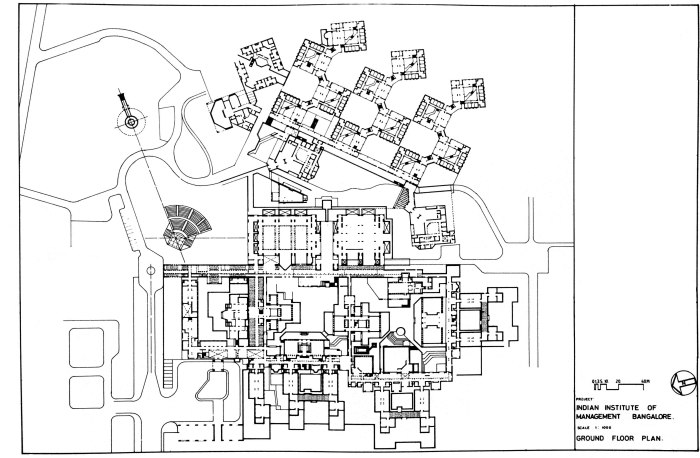
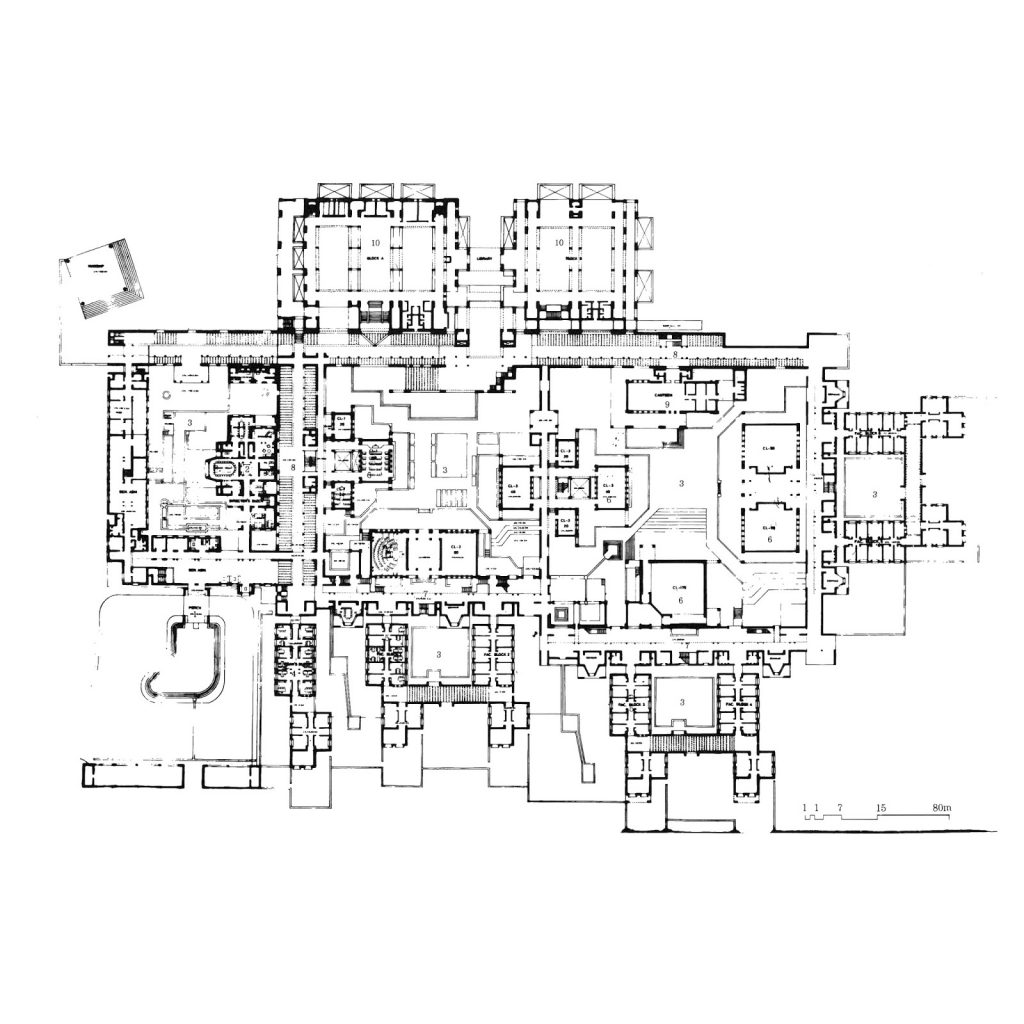
IIM campus offers various experiences for users to express and innovate their thinking. Inspired by the historic city of Fatehpur Sikhri near Agra the 54,000 sq. meter complex build over 100 acres of land. The conceptualization of the campus began in1973. IIM Bangalore can be understood as an analogue of the traditional Indian city complete with streets, squares, steps, ledges, balconies, galleries and overhangs. Doshi referred to the complex as a “Bazaar of Education”.
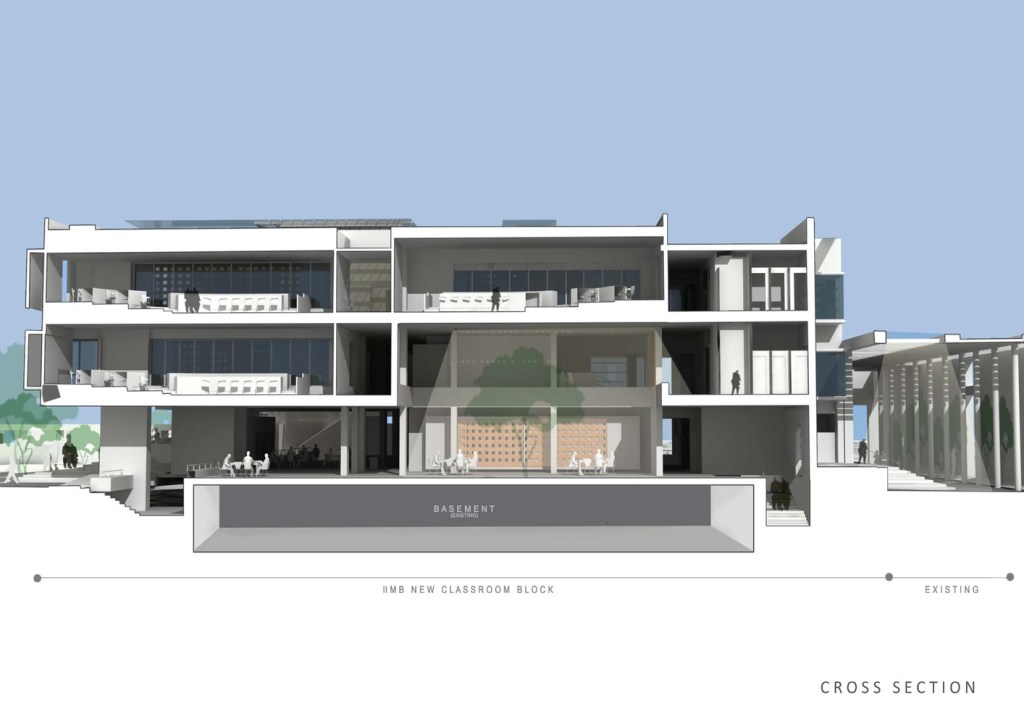
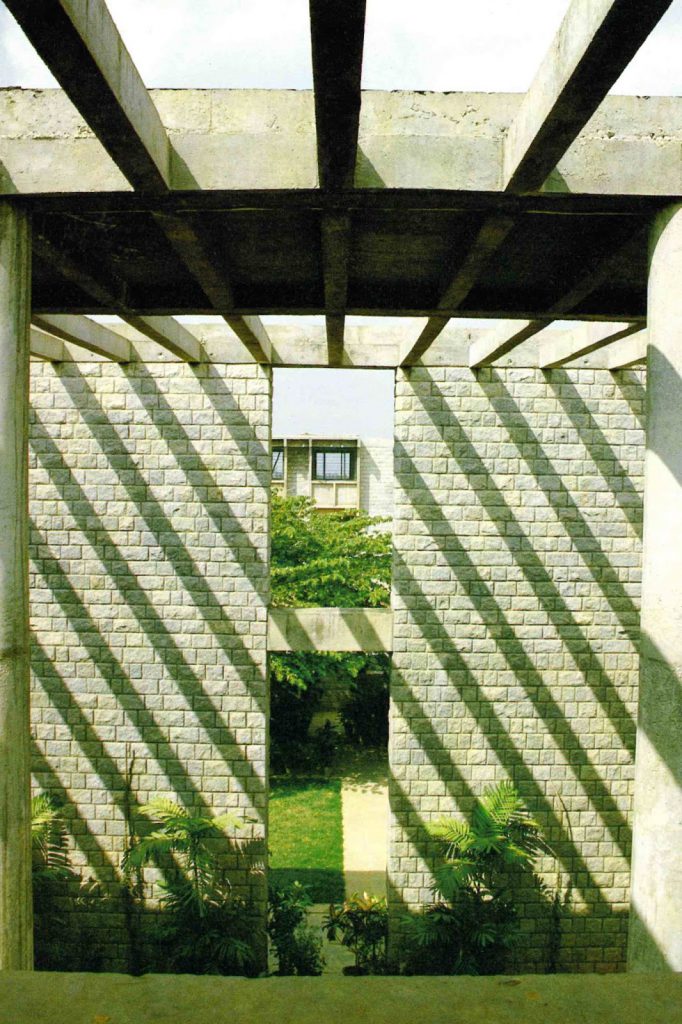
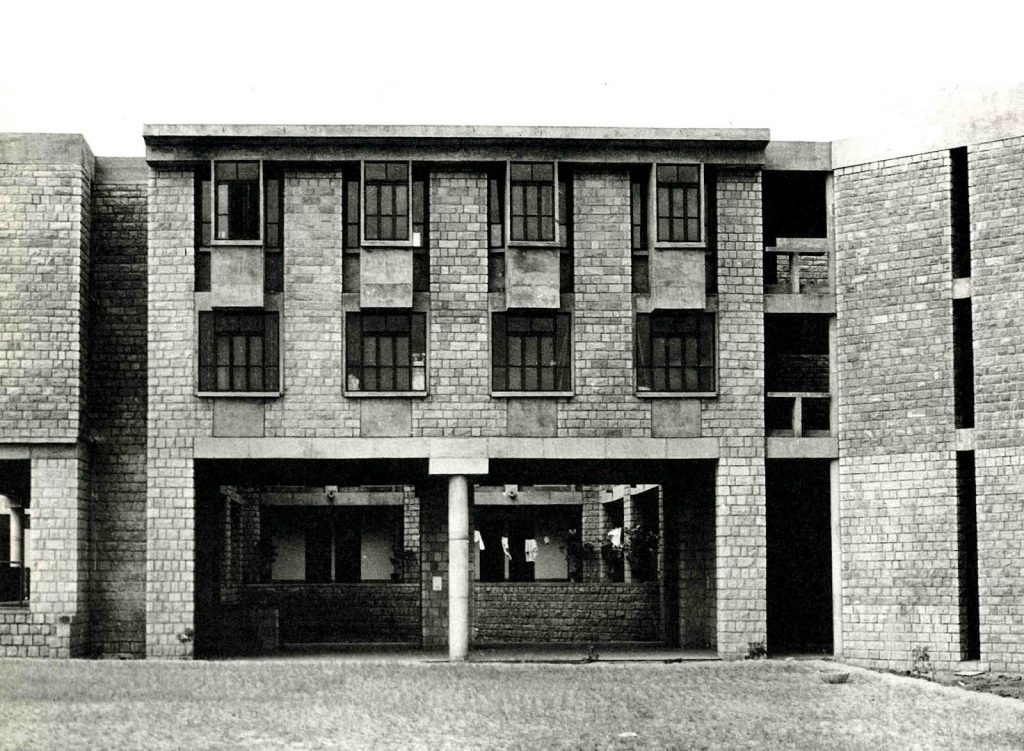
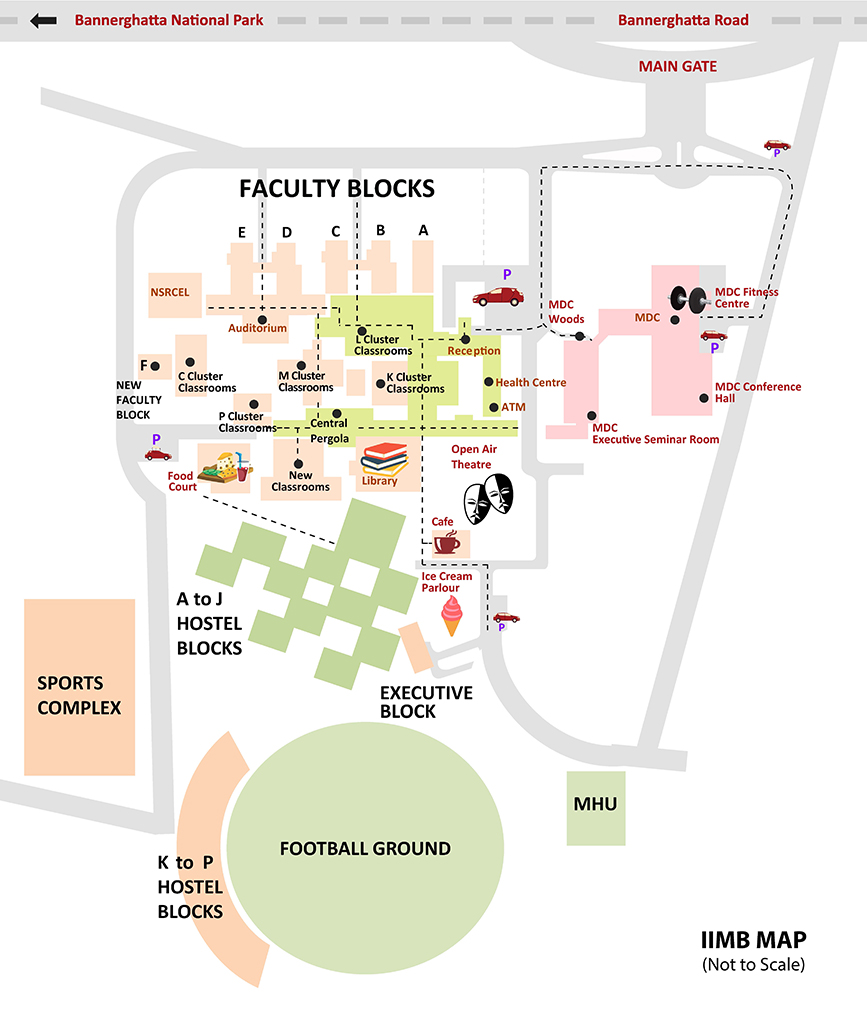
In the late 1970s, Doshi’s plan tightened up so that the academic zones were arranged around interlocking courts and terraces linked by galleries. The dormitories became angled courtyard buildings linked together by walkways and verandahs defining the pattern of indoor and outdoor spaces. The interplay of walls and openings, light and shadows, and solids and voids change the character of the main building during different times of the day and during different seasons. The width of the corridors is modulated to allow for casual seating. Access to classrooms and administrative offices is provided through these corridors.
The design offers students and faculty the ability to see and feel nature even when inside the classroom. The juxtaposition of the built space and the landscape with life creates an uncertain sequence of events that define the beautifully amorphous space within the IIM Bangalore campus. As the relationship between humans and their built environment becomes increasingly deterministic – defined by cause-and-effect programming of contemporary buildings, The IIM Bangalore campus proposes an alternate view – the one in which the built environment enables the linearity of time to be disrupted.



BV Doshi works underline his interpretation of the essence of life according to the cyclic notion of time in the Hindu philosophy namely: blossoming – accommodative, growing, adaptable & perceptive to change over time; expanding – open endedness, holistic approach and well integrated with the surrounding; melting – merging into the landscape, rooted & inclusive approach to design and churning – timeless, intangible and groundbreaking.

 AR Details